Introduction
Air freight is a structured logistics system designed to move cargo across domestic and international networks using commercial and cargo aircraft. Unlike simplified descriptions that focus only on speed, air cargo movement depends on coordinated processes involving shippers, freight forwarders, airlines, ground handlers, customs authorities, and regulatory frameworks.
Each shipment follows a defined sequence—from initial booking to final delivery—where timing, documentation, and operational precision determine outcomes. Understanding this process provides clarity on cost, transit time, and risk management.
1. Shipment Planning and Booking
The process begins with shipment planning. A shipper or business defines:
- Cargo type (general cargo, perishable goods, dangerous goods)
- Weight and dimensions
- Origin and destination
- Required delivery timeline
In most cases, a freight forwarder acts as the intermediary between the shipper and airline. The forwarder evaluates routing options, airline capacity, and pricing structures.
Pricing is influenced by chargeable weight, which considers both actual weight and volumetric weight. Availability of cargo space on specific routes also affects scheduling.
Airlines operate under frameworks established by the International Air Transport Association, which standardizes procedures such as documentation and cargo handling.
2. Cargo Preparation and Packaging
Once the booking is confirmed, cargo must be prepared according to aviation and safety standards.
Key requirements include:
- Proper packaging to withstand handling and air transport conditions
- Labeling for identification and handling instructions
- Compliance with regulations for restricted or hazardous materials
Dangerous goods must follow strict guidelines defined by the International Civil Aviation Organization and IATA Dangerous Goods Regulations (DGR).
Incorrect packaging or labeling can result in delays, rejection, or penalties.
3. Cargo Collection and Delivery to Origin Airport
Cargo is transported from the shipper’s location to the origin airport. This stage may involve:
- Local trucking or first-mile logistics
- Consolidation at a freight forwarder’s warehouse
- Preparation for export processing
At this stage, shipments may be grouped with other cargo to optimize space utilization and cost efficiency.
4. Documentation and Air Waybill Issuance
Air freight requires precise documentation to move across borders and through airline systems.
The primary document is the air waybill (AWB), which serves as:
- A contract of carriage
- A receipt of goods
- A tracking reference
The AWB includes:
- Shipper and consignee details
- Description of goods
- Weight and dimensions
- Routing and flight information
Additional documents may include:
- Commercial invoice
- Packing list
- Export declarations
- Certificates for regulated goods
Documentation standards are aligned with global trade practices influenced by organizations such as the World Trade Organization.
5. Export Customs Clearance
Before cargo can leave the origin country, it must pass export customs clearance.
Customs authorities verify:
- Accuracy of declared goods
- Compliance with export regulations
- Supporting documentation
Delays at this stage often result from incomplete or incorrect paperwork.
Customs processes are influenced by international trade rules and frameworks, including those supported by the International Chamber of Commerce, particularly Incoterms® which define responsibilities between buyers and sellers.
6. Cargo Handling at Origin Airport
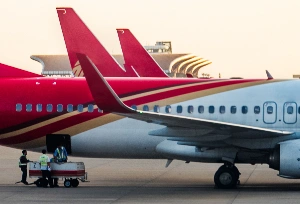
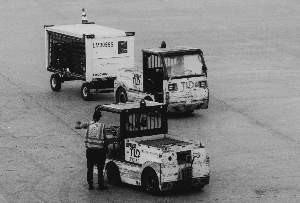
After clearance, cargo is transferred to the airline’s ground handling facility.
This stage includes:
- Security screening (X-ray or physical inspection)
- Weighing and verification
- Unit Load Device (ULD) preparation
A Unit Load Device is a standardized container or pallet used to load cargo onto aircraft efficiently.
Cargo is then staged for loading based on flight schedules and routing plans.
7. Loading and Air Transport
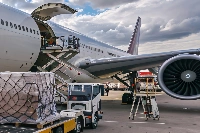
Cargo is loaded onto the aircraft according to weight distribution and safety requirements.
Types of aircraft used include:
- Passenger aircraft with belly cargo space
- Dedicated freighter aircraft
The flight may be:
- Direct (non-stop)
- Indirect (with transit stops or transfers)
Routing decisions depend on network availability, cost, and transit time.
Air cargo networks operate through major hubs such as international airports, where cargo is transferred between flights.
8. Transit and Hub Operations
For international shipments, cargo often passes through transit hubs.
At these hubs:
- Cargo is unloaded and sorted
- Transferred to connecting flights
- Reprocessed through handling systems
Transit efficiency affects total delivery time. Delays may occur due to missed connections, congestion, or operational constraints.
9. Arrival and Import Customs Clearance
Upon arrival at the destination airport, cargo undergoes import customs clearance.
Authorities review:
- Documentation accuracy
- Duties and taxes
- Compliance with import regulations
Customs clearance must be completed before cargo can be released.
Delays at this stage are commonly caused by classification errors, missing documents, or inspection requirements.
10. Final Delivery (Last-Mile Logistics)
After clearance, cargo is released to the consignee or delivered through local transportation.
Final delivery may involve:
- Trucking from the airport to warehouse or business location
- Distribution through logistics networks
At this stage, the shipment completes its journey from origin to destination.
Key Factors That Influence the Process
Several variables affect how efficiently air freight operates:
- Aircraft capacity and route availability
- Accuracy of documentation
- Customs regulations and compliance
- Packaging and cargo type
- External factors such as weather and airport congestion
Understanding these variables allows better planning and reduces the likelihood of delays or additional costs.
Conclusion
Air freight operates as a coordinated system involving multiple stakeholders and structured processes. Each step—from booking and documentation to handling, transport, and delivery—contributes to the final outcome.
Efficiency in air cargo is not determined by speed alone, but by how well each stage is executed. Clear understanding of the process enables better decision-making, cost control, and reliability in global logistics operations.